
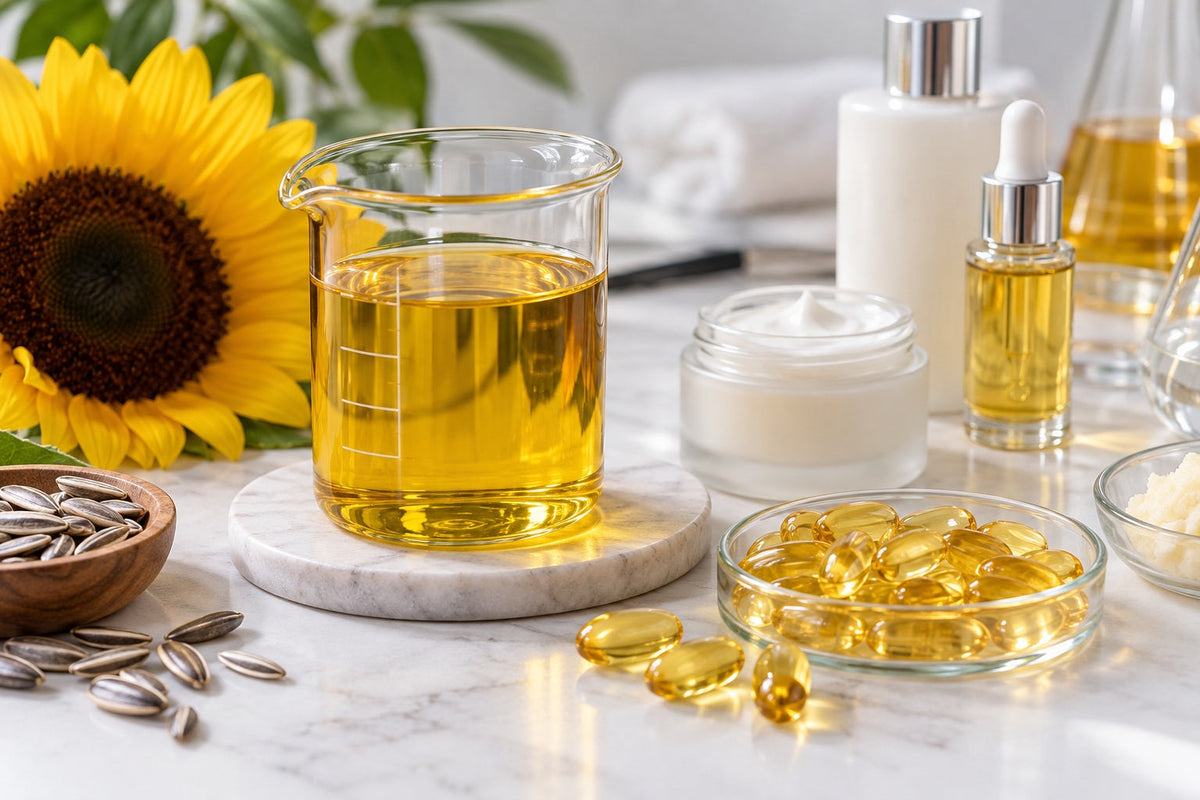
Every founder has lived this moment: the first batch smelled clean and looked perfect, and three months later the same product smells stale and the color has shifted. Nothing was contaminated. The formula simply oxidized — and in most oil-based products, the ingredient founders reach for to slow that down is vitamin E in cosmetics, the quiet antioxidant that protects the product itself first. It has a legitimate cosmetic role on skin, but its most reliable job happens inside the bottle: guarding unsaturated oils against the rancidity that ruins scent, color, and trust.
What vitamin E actually is on a label
Vitamin E is not one single material. On a cosmetic ingredient list it most often appears as Tocopherol, Tocopheryl Acetate, or in a blend that combines tocopherols with a carrier oil. Tocopherol is the form most associated with antioxidant activity in the formula itself. Tocopheryl acetate is a more stable ester form that is widely used in finished products; it behaves differently and should not be treated as interchangeable with tocopherol when the goal is protecting oils from oxidation.
Suppliers also sell mixed tocopherols, which combine several tocopherol forms. The practical lesson for a founder is simple: "vitamin E" on a purchase order is not specific enough. The exact INCI name, the source, and the job you need it to do all change what you should buy and how much you should use.

Vitamin E in cosmetics: what it actually does
It slows oxidation in oils and butters
Oxygen, heat, and light gradually break down the fatty acids in plant oils — especially the more unsaturated, more delicate ones. The result is rancid odor, color drift, and a product that feels older than it is. Tocopherol works sacrificially: it is oxidized preferentially, which helps delay that breakdown in the surrounding oils. It does not stop oxidation forever, and it does not rescue an oil that is already rancid. It buys a well-made formula time.
It supports the feel and conditioning story — honestly
In leave-on products, vitamin E is commonly included for emollient, skin-conditioning positioning: smooth feel, richness in an oil or cream, and a familiar name customers recognize. Those claims should stay cosmetic. Vitamin E is not a drug, and a product containing it should never be sold with claims about healing, repairing damage, treating scars, or changing skin structure.
It protects fragrance and color indirectly
When oils oxidize, fragrance changes with them — a scent that was bright at filling can turn flat or sharp as the base degrades. By slowing oxidation in the oil phase, vitamin E helps a fragrance and color profile stay closer to what was approved, one more reason it earns its place in scented body oils, massage oils, and oil-based perfumes.
Where vitamin E earns its place
- Body oils and scented body oils — protecting lighter carrier blends and holding the scent profile steady.
- Face oils — supporting delicate, more unsaturated oils that oxidize faster than saturated fats.
- Massage oils — large-format products that may stay open longer in use and need oxidation headroom.
- Body butters and scrubs — guarding the oil phase inside an anhydrous product that still has a shelf life.
- Beard oil and hair oil — small bottles, long use periods, and a scent the customer judges on the last application as much as the first.
What goes wrong when founders use it carelessly
The first mistake is treating vitamin E as a preservative. It is not one. An antioxidant protects oils from oxidation; a preservative system protects a water-containing product from microbial growth. A body wash, lotion, or any water-based formula still needs a proper preservative strategy and preservative efficacy testing. Putting tocopherol on the label does not answer that requirement.
The second mistake is dosing by folklore — a fixed percentage copied from a blog or a forum, regardless of the oil blend. The right level depends on how oxidation-prone the base is, the packaging, and the expected shelf life. Too little does little; an excessive amount can add cost, tack, or scent character without adding proportionate protection.
The third mistake is adding it at the wrong point in the process. How and when an antioxidant is added — with attention to heat and exposure — affects whether it is still doing its job months later, and it is exactly the kind of detail that separates a bench sample from a production run.
Packaging is part of the antioxidant strategy
No antioxidant outworks bad packaging. Air and light accelerate oxidation, so vitamin E works best alongside well-sealed bottles, droppers and pumps that limit air exchange, and opaque or amber packaging for delicate oils. Founders who spend on premium oils and then package them in clear, wide-mouth containers are paying for an ingredient and undermining it.
Keep reading
- Rosehip oil: the characterful oil that rewards careful blending
- Golden jojoba oil: the wax ester founders choose for stability
How we approach it
At Simplicity Filling Systems, vitamin E starts with a question about the base, not the label: how oxidation-prone are your oils, what package will they live in, and how long does the product need to stay true? As a full turnkey partner, start to sold, we carry ingredient sourcing, manufacturing, bottling and packaging, fulfillment, and website and marketing support — across perfumes, body washes, sugar scrubs, body oils, massage oils, beach body oil, deodorant, beard oil, and hair oil, with creams filled and packaged through our production partners. Small runs welcome, startups welcome, built to scale. Comparing quotes? Show us a comparable written quote — we'll match it or beat it.
Frequently asked questions
Is vitamin E a preservative? No. Vitamin E as tocopherol is an antioxidant: it helps slow oxidation in oils. It does not protect a water-based product against bacteria, yeast, or mold. Water-containing products need a dedicated preservative system and appropriate testing.
What is the difference between tocopherol and tocopheryl acetate? Tocopherol is the form most used to protect a formula's oils from oxidation. Tocopheryl acetate is a more stable ester commonly used in finished products. They are related, but they are not interchangeable for every job — specify the exact INCI name for the job you need done.
Can vitamin E fix oil that already smells rancid? No. Oxidation that has already happened cannot be reversed by adding an antioxidant afterward. Vitamin E helps delay oxidation in a fresh, well-handled formula; it is prevention, not a cure.
Does vitamin E make a product natural? It depends on the source and the claim. Tocopherols are commonly derived from vegetable oils, but a founder should confirm the supplier's source and documentation before making any natural-origin claim, and keep the claim matched to what the documentation supports.
How much vitamin E does a body oil need? There is no honest single number. The level depends on the oxidation sensitivity of the specific oil blend, the packaging, and the target shelf life. That is a formula decision to make with your base in front of you, not a percentage to copy from the internet.
The bottom line
Vitamin E earns its reputation quietly: it protects the oils you paid for, holds your scent and color closer to the approved sample, and supports an honest conditioning story on skin. Buy the right form, dose it for your actual base, package to match, and never ask it to do a preservative's job.
Building an oil, butter, or scrub that has to smell as good in month six as it did at filling? Contact us and tell us about the product. We will give you a straight answer on the formula, the packaging, and the run that proves it.
Simplicity Filling Systems — private-label and contract manufacturing in Sunrise, FL. Small runs welcome, startups welcome, built to scale.
Ready for your number?
Run your specs through our Quote Builder for an instant online quote — or reach out for a custom quote.
More from News

PEG-150 Distearate: The Thickener Founders Add Cold, Dose by Hope — and Then Blame When the Wash Stays Thin
Sodium Cocoyl Isethionate: The Gentle Cleanser Founders Expect to Pour Like Water — and Then Blame When the Bar Turns Gritty
